
7 Important Reasons Why Quitting Drugs is Difficult
Why quitting drugs is difficult is a question that has puzzled researchers, healthcare professionals, and loved ones of addicts for years. Drug addiction can make it difficult for individuals to overcome it as it affects the brain in multiple ways. Many factors can prevent individuals with drug addiction from overcoming their substance abuse. Overcoming drug addiction can be challenging due to a range of factors. These are physical dependence, psychological addiction, withdrawal symptoms, social pressures, and environmental triggers. In this article, we will explore these reasons in more detail and provide some tips on how to overcome them.
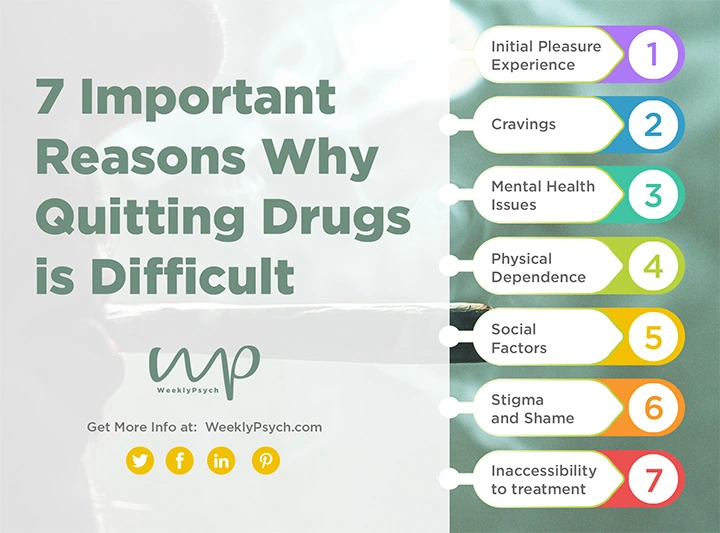
Why Quitting Drugs is Difficult
Before moving to the 7 important reasons which make quitting drugs difficult, It will be easier if we categorize these reasons. Factors that make it difficult to quit drugs generally fall into three categories: Psychological factors, Physical factors, and Social factors.
Psychological Factors
- Initial Pleasure Experience
- Cravings
- Underlaying Mental Health Issues
Physical Factors
- Physiological and Physical Dependence
Social and Cultural Factors
- Social Isolation
- Exposure to drug-using peers
- Access to drugs
- Stigma and shame
- Lack of access to treatment
Now we move to list 7 important reasons Why Quitting Drugs is Difficult and explain each of them separately.
- Initial Pleasure experience
- Cravings
-
Underlying mental health issues
- Physical Dependence
- Social and Environmental factors
- Stigma and shame
- Lack of access to treatment
1. Initial Pleasure experience
Firstly, drugs can stimulate the release of large amounts of dopamine, a neurotransmitter that is involved in feelings of pleasure and reward. This flood of dopamine creates an intense and pleasurable experience that the brain may remember and seek to repeat.
2. Cravings
Cravings are another factor that can prevent individuals with drug addiction to quit drugs. Refers to strong, often uncontrollable urges to use the drug, even after a period of abstinence or treatment. Even after the physical withdrawal symptoms have subsided, drug addiction can still cause individuals to experience strong psychological cravings for the drug. Which can be difficult to resist. Various factors such as stress, social situations, or exposure to cues associated with drug use (such as a particular location or smell) can trigger cravings. They can be very intense and can lead to relapse, especially if the person has not developed effective coping mechanisms.
Cravings can be both physical and psychological. On a physical level, the brain’s reward system becomes rewired by repeated drug use, leading to a heightened sensitivity to drug-related cues and a stronger response to the drug itself. On a psychological level, the drug may become associated with positive emotions or experiences, leading to a desire to re-experience those feelings.
3. Underlying mental health issues
Many people with substance abuse disorders have underlying mental health conditions, such as anxiety, depression, or trauma. This is one of the significant reasons why quitting drugs is difficult. These conditions can cause intense emotional pain and make it difficult to cope with daily life stressors. As a result, people with mental health problems may turn to drugs as a way to self-medicate and alleviate their symptoms. However, drug use can worsen these mental health issues, creating a vicious cycle that can be challenging to break.
4. Physical Dependence
One of the main factors that can prevent individuals from getting rid of drug addiction is physical dependence. Physical dependence occurs when the body adapts to the presence of a drug and requires it to function normally. Over time, the brain becomes desensitized to the drug’s effects, and larger amounts of the drug are needed to achieve the same level of pleasure. It is known as “tolerance.” This leads to physical dependence on the drug, where the body adapts to the presence of the drug and experiences withdrawal symptoms when the drug is not present. When a person becomes physically dependent on a drug, they may experience withdrawal symptoms when they try to stop using the drug, such as nausea, vomiting, tremors, and seizures. These withdrawal symptoms can be very uncomfortable and even dangerous.
Drug Addiction also Affects Decision-Making Abilities
Additionally, drug addiction can also affect other areas of the brain that are involved in decision-making, impulse control, and memory. These changes can make it difficult for an addicted person to stop using drugs, even when they recognize the harm it is causing to their life.
5. Social and Environmental factors
Environmental and social factors refer to the context in which drug addiction occurs and can be significant barriers to getting rid of drug addiction. These factors include a wide range of environmental and social conditions that contribute to the development and maintenance of drug addiction. Addiction is often associated with social, psychological, and environmental factors, such as stress, trauma, and social isolation. Other factors such as poverty, unemployment, social isolation, and exposure to drug-using peers or environments can increase the risk of drug addiction and make it harder to quit. Some examples of social and environmental factors that can prevent individuals from overcoming drug addiction include:
- Social isolation: Individuals who lack social support or are socially isolated may turn to drugs as a way to cope with feelings of loneliness or disconnection.
- Exposure to drug-using peers: Exposure to peers who use drugs can normalize drug use and increase the risk of drug addiction.
- Economic disadvantage: Poverty, unemployment, or other economic disadvantages can increase the risk of drug addiction, as individuals may turn to drugs as a way to cope with stress or to escape from difficult life circumstances.
- Access to drugs: Availability and access to drugs, especially in certain communities or neighborhoods, can make it more difficult to quit drug use.
- Stigma and discrimination: This can prevent individuals from seeking help or treatment. This is a social factor but I explained it separately as a 6th reason.
6. Stigma and shame
Another reason why quitting drugs is difficult is the stigma and shame associated with drug addiction. Society often views drug addiction as a moral failing rather than a medical condition, leading to widespread stigma and discrimination towards people with addiction. This can make it challenging for individuals to seek help or support, as they may feel ashamed or embarrassed about their addiction. Moreover, people with addiction may face judgment and rejection from family, friends, and colleagues, leading to social isolation and further exacerbating their addiction. Stigma and shame can also affect access to treatment, as people may avoid seeking help due to fear of being judged or discriminated against.
7. Lack of access to treatment
is another significant reason why quitting drugs is difficult. Addiction is a complex condition that requires specialized care and treatment. Many people with addiction face barriers to accessing treatment, such as high costs, lack of insurance, or limited availability of services in their area. This can prevent individuals from receiving the support and care they need to overcome their addiction. Furthermore, addiction treatment often requires long-term care, which can be difficult for people with financial or social constraints to sustain. Without access to treatment, people with addiction may continue to use drugs, leading to further physical, psychological, and social consequences.
Conclusion
Before moving to treatment and psychological support it is important to identify which type of drug is used by an addict. Here I wrote a detailed article about the most common types of drugs used by addicts. Feel free to talk directly to a mental health professional here or explore addiction management services here. Getting rid of drug addiction is a complex process that requires a comprehensive approach. A combination of physical, psychological, and social interventions are required. It can be challenging, but fortunately, it is possible. Only the right resources and support from a network of family, friends, and mental health professionals are required.